
 info@lonauto.com


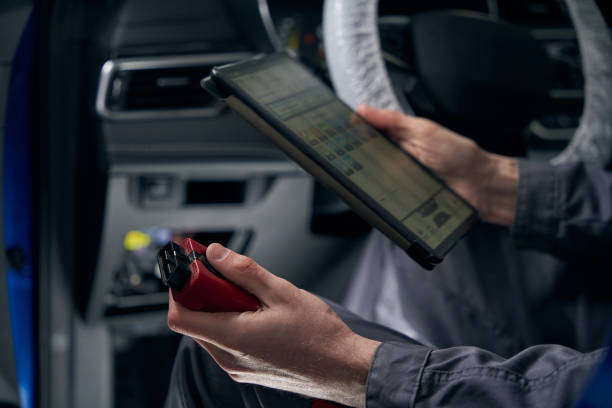
Modern technicians love using tablets and smartphones for vehicle repairs. However, the debate between cables and wireless signals never ends. You want the freedom to walk around the car. Yet, you fear a sudden disconnection during a critical ECU flash. This guide analyzes the “stability myth” of wireless car diagnostic tools. We help you choose the right connection for your workshop’s daily battles.
1. The Wired Standard: The Old Reliable
Wired connections have served workshops for decades. They offer a physical link that ignores electronic interference.
The Strengths of the Cable
A wired tool provides a consistent, high-speed data flow. You never worry about battery levels or pairing issues. Consequently, it remains the top choice for heavy programming tasks. It stays connected as long as the plug is in.
The Limitations of the Cord
However, cables limit your movement significantly. You are literally “tethered” to the driver’s seat. If you need to check a wheel sensor, the cable pulls. Therefore, it can slow down your inspection process in busy bays.
2. The Wireless Revolution: Convenience vs. Signal
Wireless technology has improved massively in recent years. Modern technicians prefer the flexibility of a mobile tablet.
The Freedom of Movement
Wireless tools allow you to stand by the lift. You can trigger components while watching them move. Furthermore, you can sit in the office while the car scans. This convenience drastically improves your workshop’s multitasking ability.
The Fear of Disconnection
The biggest concern is “data loss.” Older Bluetooth models often suffered from lag and dropped signals. If the signal breaks during a flash, it can brick a module. Therefore, the quality of the wireless chip matters most.
3. Technology Deep-Dive: Bluetooth 5.0 and WiFi Direct
We solve the stability issue with advanced hardware. We use Bluetooth 5.0 and WiFi Direct in our professional units.
-
Bluetooth 5.0: This version offers four times the range of older chips. It features “frequency hopping” to avoid interference from other tools.
-
WiFi Direct: For massive data transfers, WiFi provides a wider pipe. It handles complex graphing and live data streams without stuttering.
In our lab tests, our wireless modules maintain a solid link up to 30 meters. We measured the latency at less than 20 milliseconds. Consequently, the tool feels as fast as a wired connection. You get real-time feedback with zero “ghost” data loss.
4. Which One Should You Choose for Your Bay?
Your choice depends on the specific task at hand.
-
Choose Wired For: Heavy ECU coding or firmware updates. Use the cable when a signal drop is not an option.
-
Choose Wireless For: Daily scans, oil resets, and live data monitoring. It is the king of efficiency for 90% of garage work.
Most modern professional kits now offer “Hybrid” modes. You can use the wireless VCI for most jobs. Then, you can plug in the USB cable for high-risk programming. This dual strategy gives you the best of both worlds.
Conclusion: Trusting the Invisible Link
Wireless diagnosis is no longer a risky gamble. With Bluetooth 5.0, the “invisible cable” is stronger than ever. You gain mobility without sacrificing the integrity of your data.
Stop fighting with tangled wires every morning. Upgrade to a stable, high-speed wireless car diagnostic tool solution for your tablet. Professional diagnosis should move as fast as you do. Experience the freedom of a reliable wireless link today. Your workshop deserves a tool that keeps up with modern tech.
