
 info@lonauto.com



In the modern automotive ecosystem, the engine control unit (ECU) operates as a highly sophisticated conductor, constantly balancing the air-fuel ratio to achieve the perfect “Stochiometric” burn. At the heart of this feedback loop lies the oxygen sensor (O2 sensor). To the untrained eye, the flickering data on a dashboard might seem like random noise. However, to a professional using a high-performance oxygen sensor diagnostic tool, these voltage fluctuations are a rich, hidden language.
By capturing signals at high sampling rates, a diagnostic tool can translate raw electrical waves into actionable insights. It reveals not just whether a sensor is “broken,” but the nuanced health of the Three-Way Catalytic Converter (TWC) and the subtle imbalances in fuel injection. This article explores how advanced diagnostic technology moves beyond simple error codes to provide predictive warnings and deep-system analysis.
1. The Biological Pulse of the Engine: Understanding the $0.1V$ to $0.9V$ Cycle
A standard Zirconia oxygen sensor generates its own voltage based on the difference in oxygen concentration between the exhaust stream and the ambient air. An oxygen sensor diagnostic tool visualizes this as a rhythmic wave.
The Ideal Waveform
In a healthy engine, the upstream oxygen sensor (pre-catalytic) should oscillate rapidly between approximately 0.1V (lean) and 0.9V (rich). This rapid switching indicates that the ECU is actively adjusting fuel trim to maintain the ideal balance.
-
Frequency Matters: A healthy sensor at 2,000 RPM should switch at least eight times within a ten-second window.
-
The Diagnostic Insight: If the diagnostic tool shows a “lazy” wave—one that moves slowly or stays flat—it indicates a contaminated or aging sensor that can no longer respond to rapid changes in combustion.
2. Deciphering the “Hidden Language” of the Three-Way Catalyst
The most critical function of an oxygen sensor diagnostic tool is evaluating the health of the Three-Way Catalytic Converter. This requires a dual-channel analysis of the upstream (Sensor 1) and downstream (Sensor 2) signals.
The Mirror Effect vs. The Flatline
The Three-Way Catalyst acts as an oxygen reservoir.
-
Healthy Catalyst: The upstream sensor oscillates rapidly, but the downstream sensor should remain relatively flat (around 0.45V to 0.6V). This shows the catalyst is successfully consuming oxygen to “scrub” pollutants.
-
Deteriorated Catalyst: If the downstream sensor begins to “mirror” the upstream sensor’s rapid oscillations, the diagnostic tool reveals that the catalyst has lost its oxygen storage capacity.
Pro Tip: By comparing the “Area Under the Curve” of both sensors, the diagnostic tool can calculate a specific efficiency percentage, allowing technicians to predict a P0420 code before the Check Engine Light even illuminates.
3. High-Speed Sampling: Identifying Fuel Injection Imbalances
Generic code readers often miss “intermittent” issues because their sampling rate is too low. A professional oxygen sensor diagnostic tool utilizes high-speed data logging to catch “glitches” in the combustion cycle.
Pinpointing Misfires and Leaks
-
Lean Spikes: If the waveform suddenly drops to 0V during acceleration, the tool identifies a “lean-out” condition, likely caused by a clogged fuel injector or a vacuum leak.
-
Rich Stagnation: Conversely, if the voltage stays stuck at 0.9V, the tool points toward a leaking injector or a faulty pressure regulator.
-
The Benefit of Granularity: High sampling rates allow the tool to detect a misfire in a single cylinder by observing the tiny “oxygen spikes” that occur when unburned air enters the exhaust manifold. This precision saves hours of manual labor in the shop.
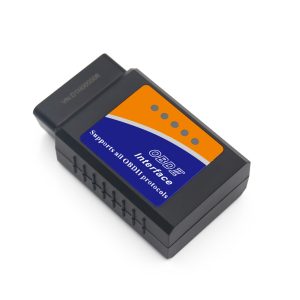 4. From “Error Codes” to “Predictive Warnings.”
The primary shift in modern automotive maintenance is the transition from reactive repair to predictive maintenance. An oxygen sensor diagnostic tool is the bridge between these two worlds.
Detecting Sensor Poisoning
Silicon (from coolants) or phosphorus (from oil) can “poison” an oxygen sensor. A high-end diagnostic tool can detect the “Response Time” of the sensor in milliseconds.
-
Early Warning: Even if the sensor is still producing a signal, a delay of 100ms in response time can lead to a 5% drop in fuel economy.
-
Environmental Impact: By identifying “lazy” sensors early, the tool helps reduce carbon emissions and prevents unburned fuel from overheating and melting the expensive catalytic converter.
5. Fuel Trim Correlation: The Final Piece of the Puzzle
A professional-grade oxygen sensor diagnostic tool does not look at the O2 sensor in isolation. It correlates the voltage data with “Short Term Fuel Trim” (STFT) and “Long Term Fuel Trim” (LTFT).
-
Positive Trim + Low Voltage: If the O2 sensor reads lean (low voltage) and the fuel trim is high (+15% or more), the tool confirms that the ECU is desperately trying to add fuel to compensate for a massive air leak.
-
Negative Trim + High Voltage: If the sensor reads rich and the trim is negative, the tool highlights an over-fueling issue, such as a restricted air intake or a heavy carbon buildup.
6. Conclusion: Mastering the Exhaust Narrative
The exhaust pipe is the “transcript” of everything that happened inside the combustion chamber. Without an oxygen sensor diagnostic tool, a technician is essentially trying to read that transcript in the dark.
By leveraging high-speed waveform analysis, dual-channel catalyst monitoring, and fuel trim correlation, these tools transform raw voltage into a clear narrative of engine health. They allow us to move beyond the binary “Pass/Fail” logic of old-fashioned scanners and enter a world of precision tuning and proactive protection. In the hands of a skilled user, the diagnostic tool doesn’t just find faults; it deciphers the very life-cycle of the vehicle, ensuring efficiency, longevity, and environmental responsibility.
