info@lonauto.com


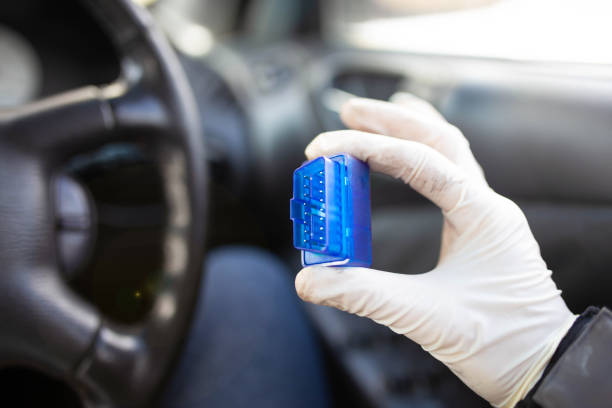
Few dashboard warnings trigger anxiety as quickly as the “Check Engine” light. For many modern drivers, the first response is to reach for a personal scanner to decode the issue. While this approach seems practical, it often leads to a common misconception: clearing a fault code is not the same as fixing the problem itself.
In reality, OBD2 diagnostic tools are far more than simple code erasers—they are powerful instruments designed to uncover the root causes of mechanical and electrical issues. Relying solely on deleting error codes can mask underlying faults, potentially leading to more serious damage over time.
In this guide, we take a more professional approach to using OBD2 diagnostic tools. Rather than focusing on quick fixes, we show you how to interpret data accurately, identify real problems, and take informed action. The goal is to help you move beyond temporarily “turning off the light” and toward maintaining true vehicle performance, reliability, and safety.
1. Common Mistakes: Why Deleting Codes is Not Enough
Many beginners treat a diagnostic scanner like a “magic eraser” for dashboard warnings. This approach can lead to expensive engine damage or failed emissions tests.
The “Clear and Forget” Myth
Some drivers believe that clearing a fault light solves the actual problem. Consequently, they ignore the warning until the car breaks down completely. You must remember that the light is only a symptom of an internal error. Therefore, deleting the code only hides the problem from your sight temporarily.
Ignoring the Live Data Stream
Many users only look at the specific four-digit Error Code (DTC). However, professional OBD2 diagnostic tools also provide real-time sensor data. Consequently, they miss critical information about fuel trim or oxygen sensor voltage. Therefore, they often replace the wrong parts based on a single code.
2. The Professional 5-Step Diagnostic Protocol
Follow this logical workflow to ensure you actually repair the vehicle.
-
Step 1: Read the Fault Codes. Connect your device and scan all available control modules.
-
Step 2: Record the Results. Write down every code and the “Freeze Frame” data immediately.
-
Step 3: Clear the Fault Codes. Use the “Erase” function to reset the dashboard light.
-
Step 4: Conduct a Road Test. Drive the car to see if the light returns under normal conditions.
-
Step 5: Perform the Repair. If the code reappears, use the data to identify the broken part.
Consequently, you avoid the “guesswork” that leads to wasted time and money. Professional OBD2 diagnostic tools act as your digital eyes inside the engine. Therefore, you should always verify a repair by seeing if the code stays away.
3. A Warning for Every Car Owner: Fix the Root Cause
Clearing a light is a temporary action, while fixing the car is a permanent solution.
-
Don’t Mask Problems: Repeatedly clearing a light can mask a failing catalytic converter.
-
Safety First: Some codes relate to braking or steering systems that require immediate attention.
-
Emissions Readiness: Clearing codes resets your “Readiness Monitors,” which may delay your smog check.
Consequently, you must respect the data your car is trying to provide. High-quality OBD2 diagnostic tools empower you to be a smarter and safer owner. Therefore, use the technology to understand your car rather than just silencing it.
Conclusion: Knowledge is the Ultimate Tool
The digital age has made vehicle maintenance more transparent for everyone. However, owning a tool is only half the battle of automotive repair.
You must apply a logical process to every “Check Engine” light you encounter. Stop settling for a dark dashboard when your engine is still struggling. Instead, embrace the full diagnostic power of your hardware. Clear the light to test the system, but fix the part to save the car. Your vehicle deserves a professional touch and a long, healthy life on the road.
☞: Seeing our Lonauto‘s OBD2 diagnostic tools.